

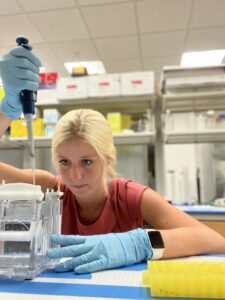
 Exposure to radiation causes double-stranded breaks (DSBs) in human DNA, leading to many types of cancers. Humans are at risk of radiation exposure through medical examinations, treatments, nuclear accidents, and space travel. Thus, investigating the effects of radiation-induced DNA damage is important for finding new ways to protect humans from radiation-induced disorders. Last year, I investigated the effects of DSBs on B-Raf, an important signaling protein involved in cell growth and DNA repair pathways using human cancer cells as models. These cells were treated with doxorubicin, a radiomimetic drug (a compound that mimics radiation and creates DSBs in cells).
My results clearly show a concentration-dependent reduction specifically in the B-Raf protein levels. This decrease in B-Raf levels also correlates with the formation of DSBs in the treated cells. The mechanisms underlying this specific reduction of B-Raf levels due to doxorubicin treatment are unclear. During this scholarship, I intend to analyze the effects of doxorubicin treatment on Ras protein, which is essential for forming functional heterodimers with B-Raf. Additionally, I will also examine the effects of doxorubicin on the levels of B-Raf and Ras mRNA. My studies would shed new light on understanding the effects of DSBs due to radiation exposure, leading to new developments for protection against radiation exposure for astronauts and other space travelers. Additionally, these studies may further improve therapeutic applications of radiomimetic drugs, like doxorubicin, in the treatment of various cancers.

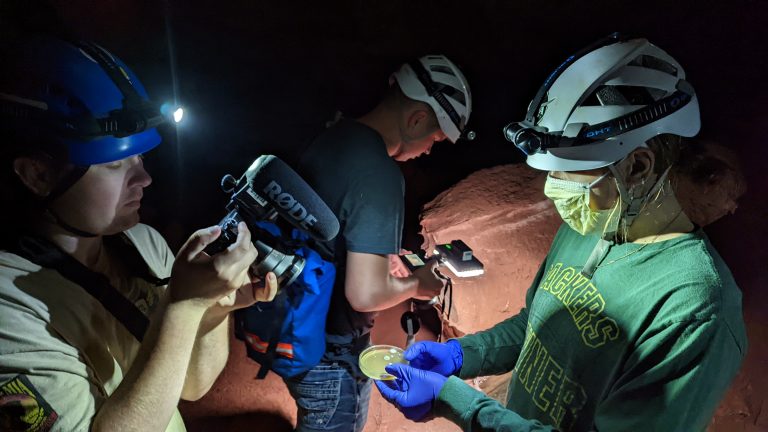 Samples were collected at Wind Cave National Park on multiple different trips. As the team goes deeper and deeper into the cave, the goal is to actively trace the types of microorganisms (fungi, bacteria, and archaea) throughout the cave. The process to obtain genus- and species-level identification of these samples utilizes PCR amplification of different sections of their genomic DNA followed by sequencing analysis. The objective of this project is to make a genetic map of the Wind Cave microbial system that includes public tour routes as well as deep wild cave regions, including previously reported lake extremophiles. This effort will determine how genetically unique or isolated the lake system is and what influence surface microbes and anthropogenic contamination from cave explorers may have had on the subterranean microbiome. An initial phylogenetic tree showing the relatedness of the identified microorganisms is presented. This project is based upon work supported by the Iowa Space Grant Consortium under NASA Award No. 80NSSC20M0107.